
How to Find the Right Breeder for a Service Dog Prospect

Choosing a breeder for a future service dog is very different from choosing a breeder for a companion pet. When people in the working and service dog world describe a pedigree as “lackluster,” they’re usually not talking about aesthetics or gatekeeping.
They’re talking about evidence, or the lack of it.
Specifically, evidence that the dogs behind your puppy were capable of handling structure, pressure, novelty, and work.
What Pedigrees Are Meant to Show You
A pedigree is not just a family tree. It’s a record of what previous generations were evaluated for and what they were capable of.
Depth matters. When a pedigree includes multiple generations of dogs that were tested, titled, or certified in some way, it gives you insight into what traits are likely being produced consistently. That matters when you’re asking a dog to regulate emotions, work in public, recover quickly from stress, and perform reliably in real-world environments.
When a pedigree has little to no titles or certifications, there’s simply more unknown. You don’t know how those dogs handled novelty, distractions, or pressure. You don’t know if they had the capacity to work, problem solve, or sustain focus outside of familiar environments.
For a pet home, that uncertainty may be fine. For a service dog prospect, it significantly increases risk.
A Balanced Take on Titles in a Pedigree
Having one or two dogs in a pedigree with few or no titles is not automatically a dealbreaker.
Pedigrees should be evaluated as a whole, not with an all-or-nothing mindset. A strong pedigree can still exist even if a few individuals were not titled, especially if the surrounding generations show consistency in work, structure, temperament, and health.
What raises concern is a pedigree that is entirely or overwhelmingly devoid of proof across generations. That pattern suggests dogs were not tested, not evaluated objectively, and not intentionally improved in measurable ways over time.
Context matters. The goal is not perfection. The goal is informed decision-making.
What Titles Actually Represent
Titles are often misunderstood as dogs simply “winning competitions.” In reality, titles are dogs being evaluated against objective standards by third parties.
Those standards might be structural, such as conformation, where a dog must meet a physical breed standard while also demonstrating stable temperament, trainability, and appropriate social behavior in busy, distracting environments.
They may also be working or sport standards, where a dog must perform specific tasks under pressure, distraction, and novelty. These venues test nerve, resilience, biddability, and emotional regulation in ways that closely mirror the demands placed on service dogs.
Dogs do not earn advanced titles without intentional breeding, significant training, financial investment, and the temperament to support that work.
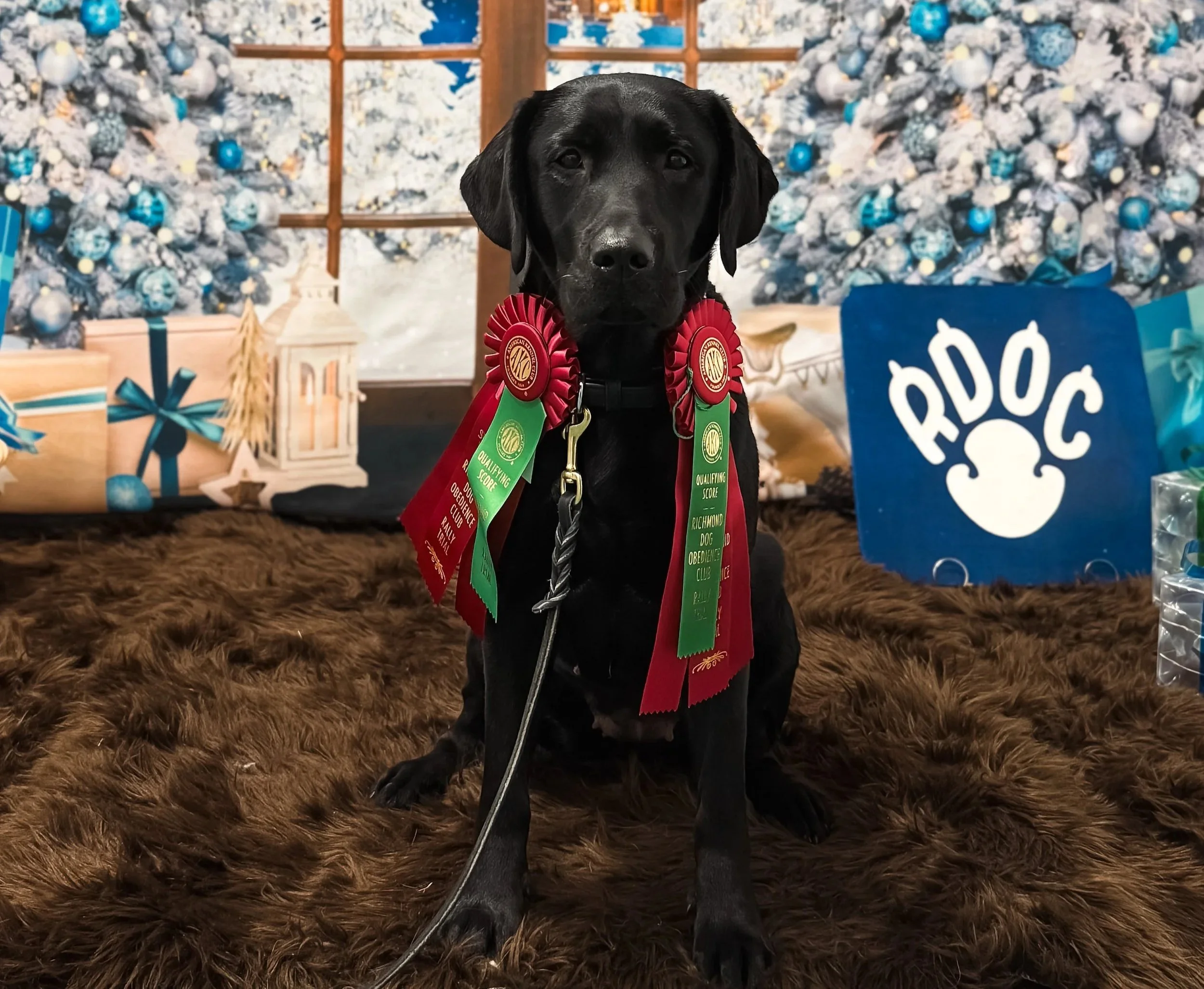
Titles are not everything, but they are one of the clearest ways to show that a dog has been evaluated beyond a breeder’s personal opinion.
Not All Titles Are Created Equal
All titles are not the same, and it’s important for buyers to understand what different titles actually require.
Some titles represent minimal requirements, while others reflect extensive training, environmental exposure, and sustained performance over time. A title name alone does not tell the full story.
Prospective buyers should take the time to look up what goes into each title. This information is often publicly available through registry rules, and many titles can be researched further by watching trial footage or venue examples online, including on platforms like YouTube. Seeing what a dog is actually required to do provides far more clarity than a title acronym alone.
Understanding the substance behind a title helps you assess whether it aligns with the traits you want in a service dog prospect.
Understanding Registry Differences and Missing Titles
Not all titles appear on all pedigrees.
In the United States, AKC pedigrees primarily display AKC titles. Titles earned through other registries, such as UKC conformation or hunt titles, often do not show up on AKC pedigrees at all.
In those cases, breeders should be able to provide proof such as certificates, points checks, or official records. Because UKC titles can be harder to verify publicly, transparency from the breeder is especially important.
It’s also important to understand that you will not see incomplete AKC championship progress on a pedigree. A dog may be actively being shown and pointed but not yet finished. AKC championships can take time, especially in slower-maturing lines, and it is not unusual for dogs to finish at or after 3-4 years of age.
Buyers can research AKC championship progression through the AKC website using points check tools. This allows you to see whether a dog has earned points, whether progress is being made, and whether there is ongoing effort toward completion. The same applies to progression from CH to higher titles such as GCH or GCHS.
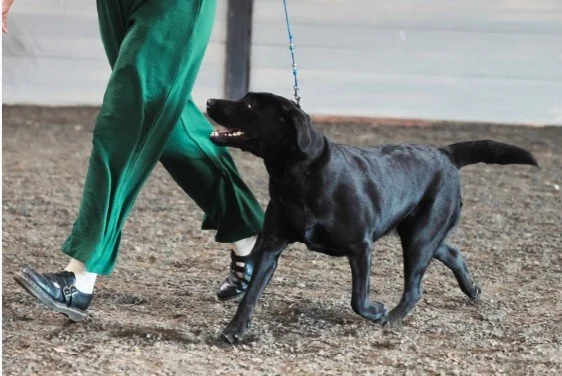
This type of research helps distinguish between dogs who were never pursued and dogs who are actively being evaluated but simply not finished yet.
What Titles Say About the Breeder
Titles and working certifications reflect breeder priorities as much as they reflect the dogs.
They require time, money, planning, and a willingness to have dogs evaluated by outside judges, trial officials, or certifying bodies. This demonstrates that the breeder is reinvesting into their program rather than simply producing litters.
Everyone believes they have great dogs. The difference is whether that belief is supported by objective evaluation.
A pedigree entirely devoid of titles often represents generations of dogs that were never tested or externally assessed. That doesn’t automatically mean the dogs are bad, but it does mean buyers are relying almost entirely on breeder claims rather than evidence.
How Health Testing Fits Into the Bigger Picture
Health testing is critical, but it should be viewed across generations, not in isolation.
Established working and titled lines often come with long histories of documented, passing health results. That generational data lowers the likelihood of inherited orthopedic and congenital conditions that can derail a service dog’s career early.
One-off health testing on a single breeding pair is not equivalent to decades of consistent outcomes. When health, structure, temperament, and work are all prioritized together over time, risk is significantly reduced.
Program Differences Matter
This discussion does not apply universally.
Nonprofit programs within Assistance Dogs International operate under highly standardized breeding and evaluation systems with extensive internal testing. Their infrastructure often replaces the need for public titles.
Most private service dog programs, trainers, and owner-trained teams do not have access to that level of internal standardization. In those cases, pedigrees, titles, health data, and breeder transparency become especially important tools for evaluating risk.
Choosing Better Odds, Not Guarantees
No breeder, pedigree, or puppy can offer guarantees. Service dog training will always involve variables.
But starting with a breeder who proves their dogs through structure, temperament, health testing, and objective evaluation gives you better odds. It allows you to make informed decisions rather than hopeful guesses.
At Helping Howls, this philosophy guides both our service dog training programs and our upcoming breeding program. We focus on dogs who are physically sound, emotionally stable, and capable of real work, not just dogs with appealing labels or marketing language.
If you’re searching for a service dog prospect and want help evaluating breeders, pedigrees, or title records, or if you’re interested in a breeding program intentionally designed with service work in mind, we’re here to help you start with clarity instead of crossing your fingers.
Because the right foundation doesn’t guarantee success, but it makes success far more likely.